School work has a fixed constraint that overrides everything else: the building is only empty for a few weeks. That single fact shapes the survey, the film choice and the phase plan, and it is why campus projects are quoted by people who have done them before.
One campus, four specifications
A typical secondary school contains at least four distinct glazing situations. Classrooms with data projectors need glare control on the sunward side and nothing on the shaded side. Sports halls and atria have high-level glazing that is unreachable from inside. Corridors and stairwells carry full-height glass that is a fragment-injury risk. And the entrance and reception usually need both.
Treating the campus as one specification either over-spends on the classrooms or leaves the stairwell unaddressed. The survey should produce a schedule by room type, and the quotation should follow it.
Glare is the classrooms' real problem
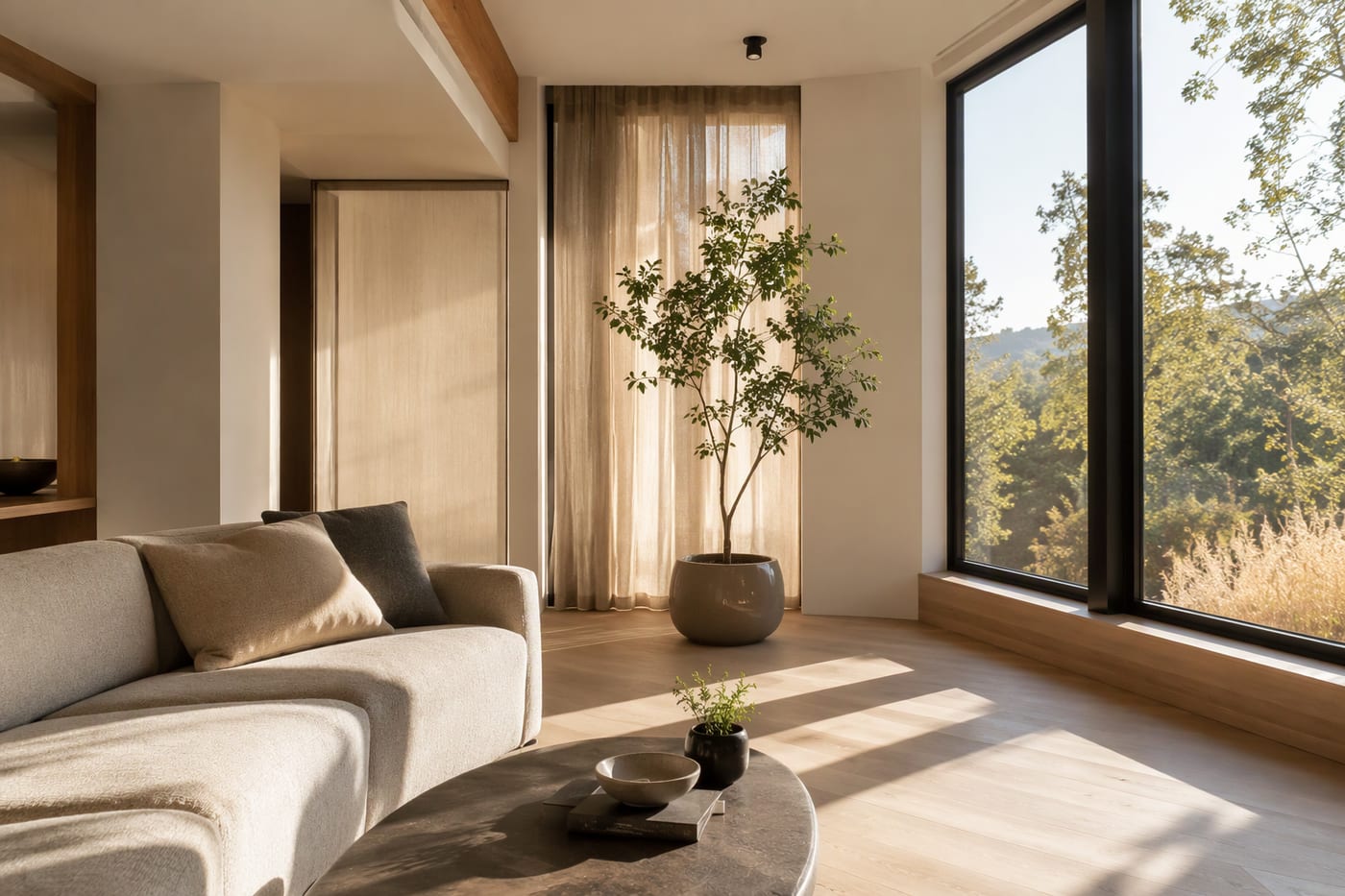
Teachers describe it as "we cannot use the projector after lunch". That is a glare problem on a specific elevation, and the fix is a modest reduction in visible transmission rather than a dark film. Over-specifying here is a common error: a deep shade that solves the projector problem makes the room gloomy in winter and generates a different complaint.
Where the school is also overheating, the same film can do both, but the specification should be set by the glare requirement first and checked against the thermal one.
Safety film on the circulation routes
Full-height glass in corridors and stairwells is where fragment retention earns its place, and where a school is most likely to have a real risk assessment. Four mil is the usual specification; the film retains shards and keeps the opening closed after an impact.
Two caveats belong in the proposal. Film does not make the glazing a certified safety glass, and on a guarding panel the frame and fixings carry the barrier function. If the school's risk assessment treats the glass as a barrier, the whole assembly is the subject.
The holiday window
Most of the work happens in the summer break, which means the order has to be placed early enough for production and shipping, and the survey has to happen in term time. A survey done in the last week of term is a survey that finds the inaccessible panels too late.
Phasing by block is usually the only way to finish: one building per week, with the film for each block packed and labelled separately. Ask for that packing — it removes a sorting step from a site that has no space to sort.
Hand it over properly
Schools are cleaned by staff with whatever is in the cupboard. A film that survives a decade of correct cleaning will not survive a scraper. The handover should include a one-page cleaning instruction for the caretaking team, and the estates department should hold a copy.
Add an annual inspection to the maintenance schedule. Edge lift on a stairwell panel is a safety issue, and nobody will notice it unless somebody is looking.
The short version
- Survey by room type; one campus rarely has one specification.
- Set classroom film by glare, then check it against the heat load.
- Use fragment-retention film on corridors, stairwells and full-height glass.
- Order early enough to fit the holiday window, and pack per block.
- Hand over a cleaning instruction and a yearly inspection.