Automotive window tint film · On request
Polarized Window Tint Film
Polarized Window Tint Film. Dyed, nano-carbon and ceramic tints for car side and rear glass, supplied by the roll for installers and distributors.
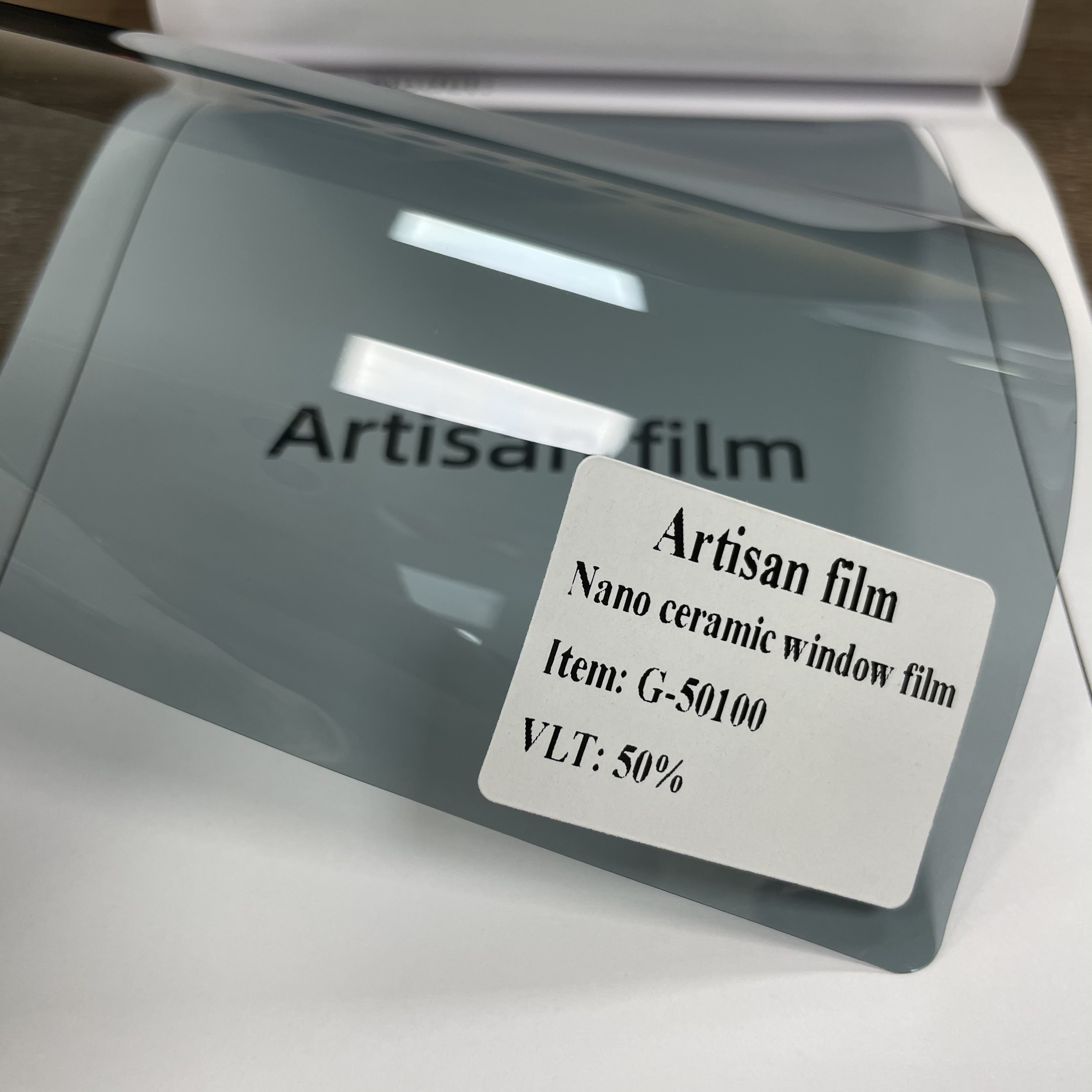
What it is
Polarized Window Tint Film. Dyed, nano-carbon and ceramic tints for car side and rear glass, supplied by the roll for installers and distributors.
- Heat & glare reduction
- UV blocking
- Shade / privacy options
- Self-adhesive, heat-shrink fit
Where it goes
Specification
- Model
- On request
- Thickness
- On request
- Appearance
- On request
- UV
- On request
- IR rejection
- On request
- Width
- On request
- Length
- On request
- MOQ
- 1 roll
- Price
- $150–155
- Packing
- On request
- Lead time
- On request
- Warranty
- On request
Fields marked “On request” are confirmed in the datasheet issued with your order — we would rather leave a number blank than publish one we cannot measure on your batch.
How it works
A car is a greenhouse with a small engine
Glass area on a modern car is large relative to the cabin volume, and the cabin is small relative to the person inside it. That ratio is why a vehicle heats up faster than a room behind the same glass: there is very little air to absorb the gain, and nowhere for it to go.
The film does two separate jobs, and buyers routinely confuse them. Visible light transmission decides how bright and how private the cabin is. Infrared rejection decides how much of the sun's heat is stopped at the glass rather than absorbed by the seats and dashboard. A film can be dark and reject little heat, or light and reject a lot — the pair is what you buy, not the shade name.
Where the market regulates front side glass, the legal minimum is a floor on the VLT you can sell there, and the rear glass is usually free. That split is why automotive ranges are sold as a shade ladder with two or three steps that suit front glass and the rest for the rear.
Selection
Dyed, metallised or ceramic — what the price difference buys
Dyed film absorbs heat. It is the cheapest construction, it looks correct on the roll, and it has a finite life in strong sun because the dye is doing the work. In a hot climate with a car parked outside all day, that life is shorter than the warranty conversation usually admits.
Metallised film reflects instead of absorbing, so the glass runs cooler and the cabin recovers faster. The trade-off is real: a metal layer can interfere with toll transponders and some keyless systems, and it raises the reflectivity of the glass, which matters on a light-coloured car.
Ceramic or non-metallic high-IR constructions sit above both. They reject infrared without a metal layer, so there is no signal interference and no mirror effect, and they hold their performance longer. They cost more per roll, which is only a problem if you sell on price to buyers who will not notice the difference in the cabin.
Installation
Curved glass is where the labour cost lives
Side glass is curved in two directions. A film that will not shrink will not lie flat, and the installer's time goes into heat-shrinking it on the outside of the pane before it ever goes inside. That is why the film's shrink behaviour matters more to your customer than its datasheet thickness.
Three details decide whether the job comes back: the dot matrix at the edge of the rear window, where film cannot bond and air stays visible; the defroster lines, which trap air if the film is applied too fast; and the rubber seals, which should be checked before the film is cut rather than after.
Automotive film also cures faster than architectural film and is far less forgiving of contamination. A single dust particle under the film on a door glass is in the driver's eyeline, and the customer will find it.
Export packing
How a roll reaches an installer still flat and clean
Automotive rolls ship on a core, boxed, and the box is what protects the edges. A roll that has been stood on its end in a warehouse has a deformed edge, and a deformed edge cannot be plotted without waste — which is the first thing a tint shop notices and the last thing a supplier hears about.
Shade consistency across a container matters more here than in architecture. Two cars tinted from two rolls that differ slightly will be parked next to each other at the dealership. If you sell to a dealer group, ask for the batch to be held as one run and shipped together.
Packing is normally a printed carton per roll, rolls standing upright on a pallet, strapped and shrink-wrapped. Pallet heights are set by the container, not by preference — say the destination and we build to the loading that fits it.
Limits
Where automotive film is the wrong product
The windscreen. It is laminated, it is regulated, and in most markets any film on it is either illegal or restricted to a narrow band at the top. Selling a full windscreen application into a market that checks is a short route to a complaint.
Night driving at the dark end of the range. A shade that looks correct in a showroom at noon is a different product at midnight in rain. Where the buyer's market has enforcement, the legal minimum exists because of this.
Metal film on vehicles with transponder-dependent systems. Toll tags, some keyless entry systems and certain antenna placements can be affected. Ask before the container, not after the first complaint.
Vehicles with existing film. Removal is a separate, slower job, and old adhesive on a rear window with defroster lines is where installers lose money on a quoted price.
Limits
Where this film is the wrong answer
Automotive film is sold to the trade. We do not publish retail shade charts or install instructions that replace training.
Questions
What buyers ask before ordering
Four questions that decide most orders in this series.
What VLT range should a distributor stock?
Three steps cover most of the market: a near-clear grade for front side glass where the law sets a floor, a mid shade that suits most retail customers, and a dark grade for rear glass. Stocking more shades than that ties up capital in rolls that move slowly.
Does ceramic film really justify the price difference?
It does where the customer keeps the car and notices cabin heat, and where signal interference from a metallised layer is a problem. It does not justify the difference for a buyer whose customers choose on shade and price alone. Sell the construction against the use, not against the spec sheet.
Can one roll supply both a car and a small architectural job?
Physically yes, commercially no. The widths, the packaging and the warranty language differ, and mixing the two in one SKU confuses the buyer and the customs description. Keep the ranges separate even when the construction is similar.
How is the film packed for sea freight?
Rolls on cores, boxed individually, stood upright on a pallet and strapped. Cartons carry your brand on private-label runs. Say the destination port and whether the pallet has to be fumigation-free, and the packing is built to that.
Ask about polarized window tint film
Send the quantity, the destination port and — if it matters — the glass build-up. You get price, MOQ and the datasheet in one reply.